
Case Study · Automotive parts

Variant Changeover Under 5 Minutes, Pick Alignment ±0.2 mm — Hyundai Robotics HH7 Flexible Feeding

A configuration verified together with Hyundai Robotics, pairing the AIVE flexible feeder and RoboEYE vision with the HH7 robot. On automotive sensors, housings and terminals, it confirmed variant changeover under 5 minutes and pick alignment of ±0.2 mm.

Pick alignment accuracy Automotive sensors, housings and terminals in the verification configuration
±0.2 mm
Variant changeover (recipe swap) time Parts applied in the verification configuration
Under 5 min
Pick defect rate Parts applied in the verification configuration
0.1% or less

AIM × Hyundai Robotics | HH7 Flexible Feeding & RoboEYE Vision Integration

Watch on YouTube →

What and how

Configuration of this case

Part
Automotive sensors · housings · terminals
Process
Feeding → vision recognition → pick
Robot
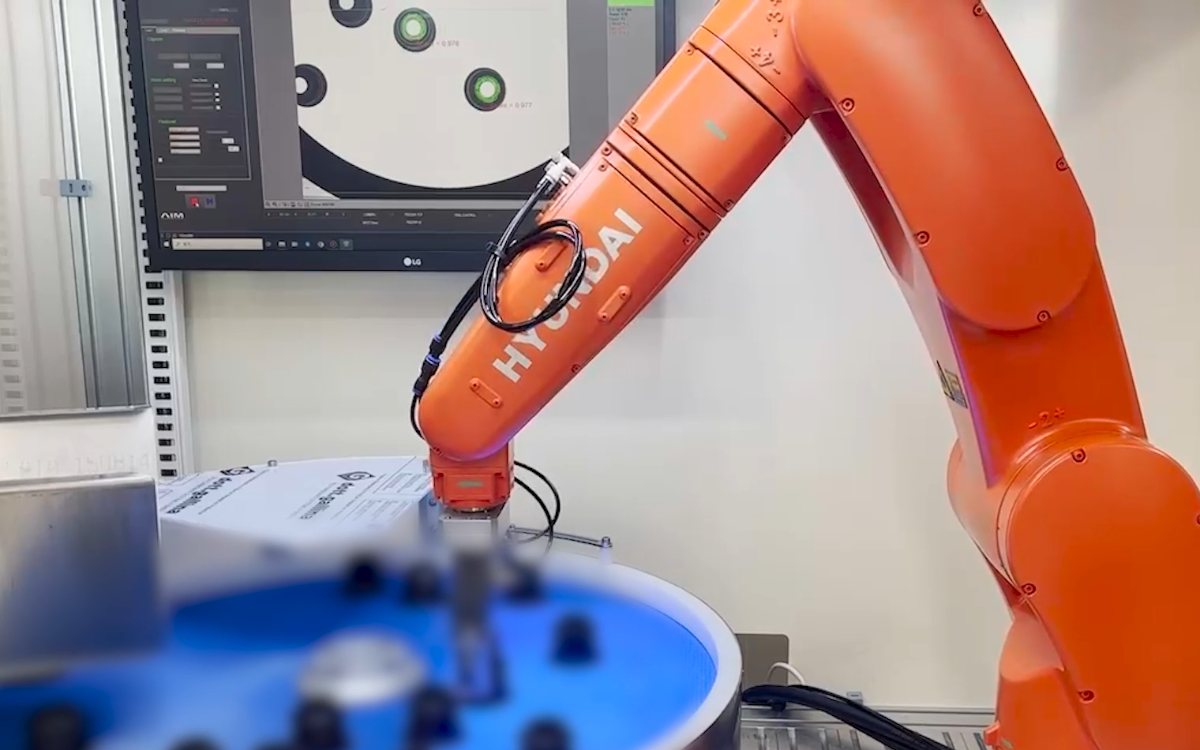
Hyundai Robotics HH7
Feeder
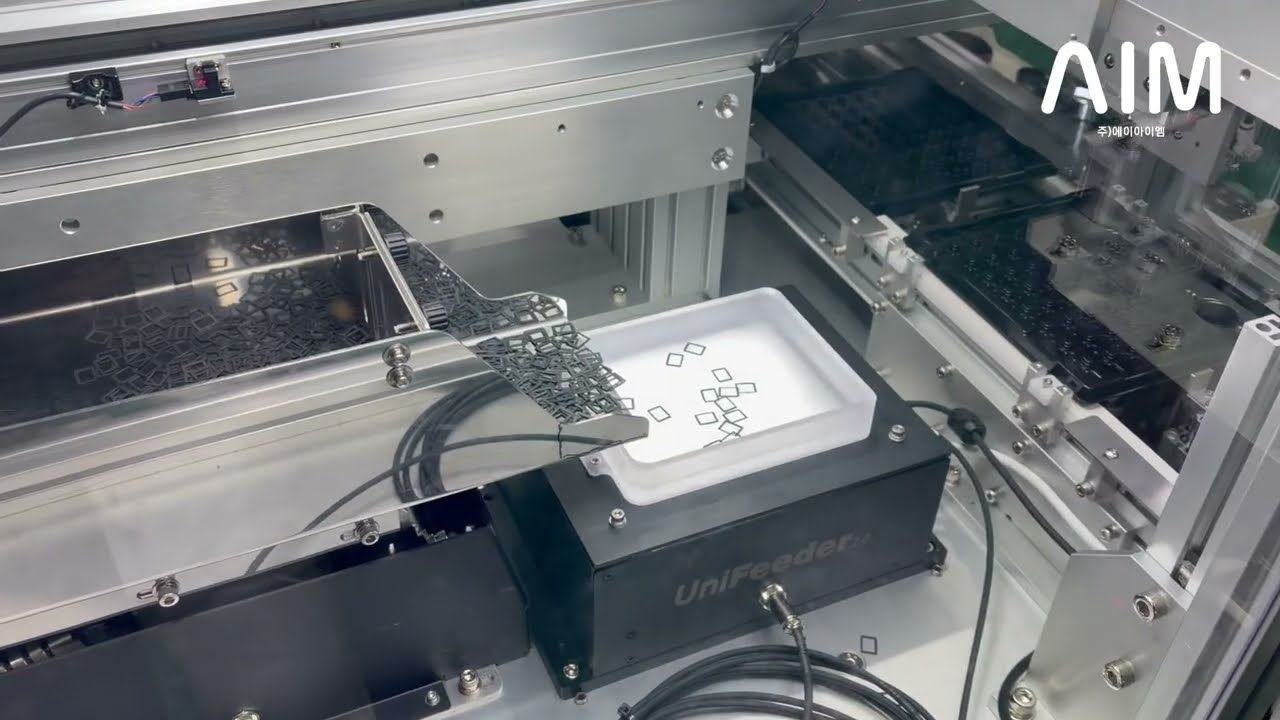
AIVE flexible feeder + FlexiBowl
Vision
RoboEYE 2D smart vision
Interface
TCP/IP · digital I/O (Trigger · Done · Retry)
Industry
Automotive parts
Variant Changeover Under 5 Minutes, Pick Alignment ±0.2 mm — Hyundai Robotics HH7 Flexible Feeding — part and detection view

Challenge

Every variant change meant changing the feeder hardware

Together with Hyundai Robotics, the target was high-mix, low-volume production handling automotive sensors, housings and terminals on a single piece of equipment. Because a vibratory feeder uses a dedicated jig shaped to the part, every variant change meant swapping the hardware and readjusting it. Feeding small parts quickly and changing variants frequently were hard to satisfy at the same time on the same equipment.

Solution

Vision finds the coordinates, and if it can’t, the feeder re-scatters — robot, vision and feeder in one loop

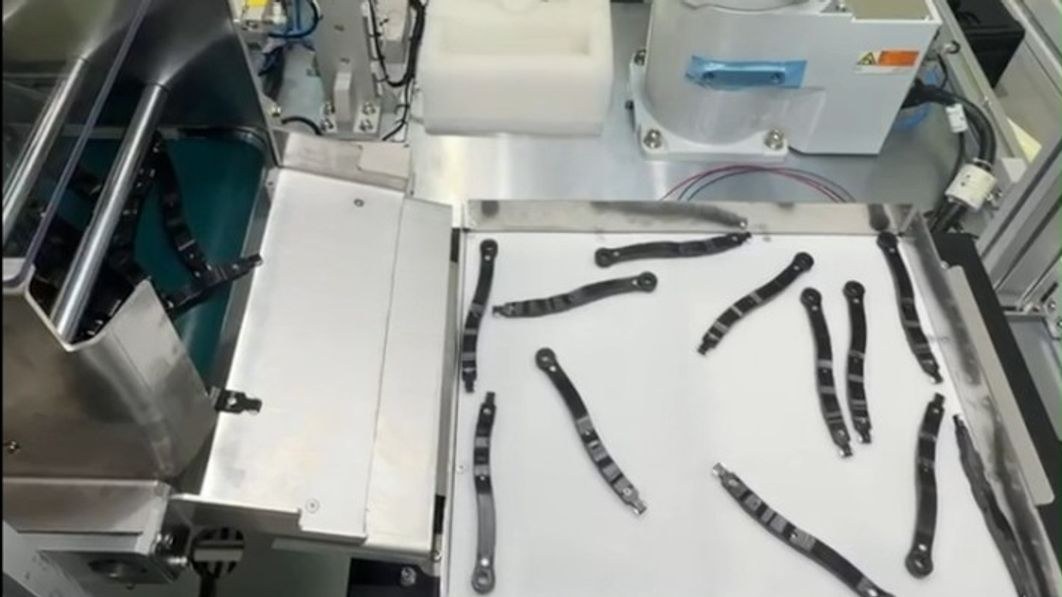
The AIVE flexible feeder and FlexiBowl scatter the parts on a flat surface, and RoboEYE 2D smart vision computes the pick coordinates and passes them to the Hyundai Robotics HH7. Because vision finds the part instead of a jig aligning it, a variant change is just a recipe swap.

One cycle runs in the following order.

  • The robot sends an image trigger signal to vision.
  • RoboEYE analyzes the image and computes the pick coordinates.
  • If the part is judged unpickable, the feeder is controlled automatically to re-arrange the parts.
  • After re-imaging, pickable coordinates are sent to the robot.
  • The robot picks the part at those coordinates and moves it to the next process.

Robot, vision and feeder are connected over TCP/IP and digital I/O (Trigger · Done · Retry), checking each other’s status in real time. Because a failed pick is handled by re-arranging rather than by human intervention, the loop is never broken.

Results

Variant changeover came in under 5 minutes, and pick alignment within ±0.2 mm

  • Variant changeover time under 5 minutes — for the parts applied in this configuration. Unlike a vibratory feeder, where a jig had to be machined and fitted for each part, the hardware is not touched.
  • Pick alignment accuracy ±0.2 mm — for the automotive sensors, housings and terminals in this configuration.
  • Pick defect rate 0.1% or less — for the same part family.
  • Automotive sensors, housings and terminals were fed on a single piece of equipment without jig changes.
FAQ

Frequently asked about this case

Can a flexible feeder and vision be attached to a Hyundai Robotics robot?

This case is that configuration. The AIVE flexible feeder and RoboEYE vision were attached to the Hyundai Robotics HH7, and robot, vision and feeder were tied together over TCP/IP and digital I/O (Trigger · Done · Retry) to exchange signals.

How do you feed high-mix small parts that are difficult for a vibratory feeder?

Instead of a dedicated jig shaped to the part, the feeder scatters the parts on a flat surface and vision finds the pick coordinates. When the variant changes, only the recipe changes — no hardware change.

What has to change for a variant changeover, and how long does it take?

Only the recipe changes. In this configuration, changeover took under 5 minutes. Unlike a vibratory feeder, where a jig had to be machined and fitted for each part, the hardware is not touched.

Does the line stop when vision cannot find a part?

When a part is judged unpickable, vision automatically controls the feeder to re-scatter the parts, re-images, and then sends pickable coordinates to the robot. The loop continues without human intervention.

How accurate is the pick?

In this configuration, alignment accuracy was ±0.2 mm and the pick defect rate was 0.1% or less. It depends on part shape and lighting conditions, so it is finalized after verification with the actual part.