

Flexible Feeding
Flexible Feeding System — feed a wide variety of parts on one machine.
A flexible feeder ties spreading (vibration or rotation), vision recognition and coordinate alignment into one flow to feed high-mix parts reliably. One Recipe switches vision, robot and feeder together, which makes it a better fit than a bowl feeder for high-mix, high-precision operation.
01
What is a flexible feeder? — flexible feeding that replaces parts feeders and bowl feeders
Flexible feeding is a way of supplying parts that standardizes spreading (vibration or rotation), recognition (vision) and coordinate alignment (calibration) so that one machine feeds many different parts with repeatable picks. Unlike a part-specific parts feeder (bowl feeder), it feeds high-mix parts without swapping tooling, so it replaces the conventional parts feeder in high-mix, low-volume production.
02
A problem unsolved for 100 years
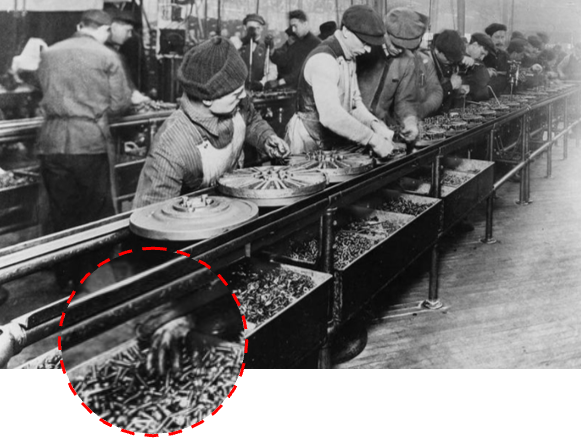
The way parts are fed has not fundamentally changed since the Industrial Revolution.
- 1870
2nd Industrial Revolution
Mass production introduced — by hand
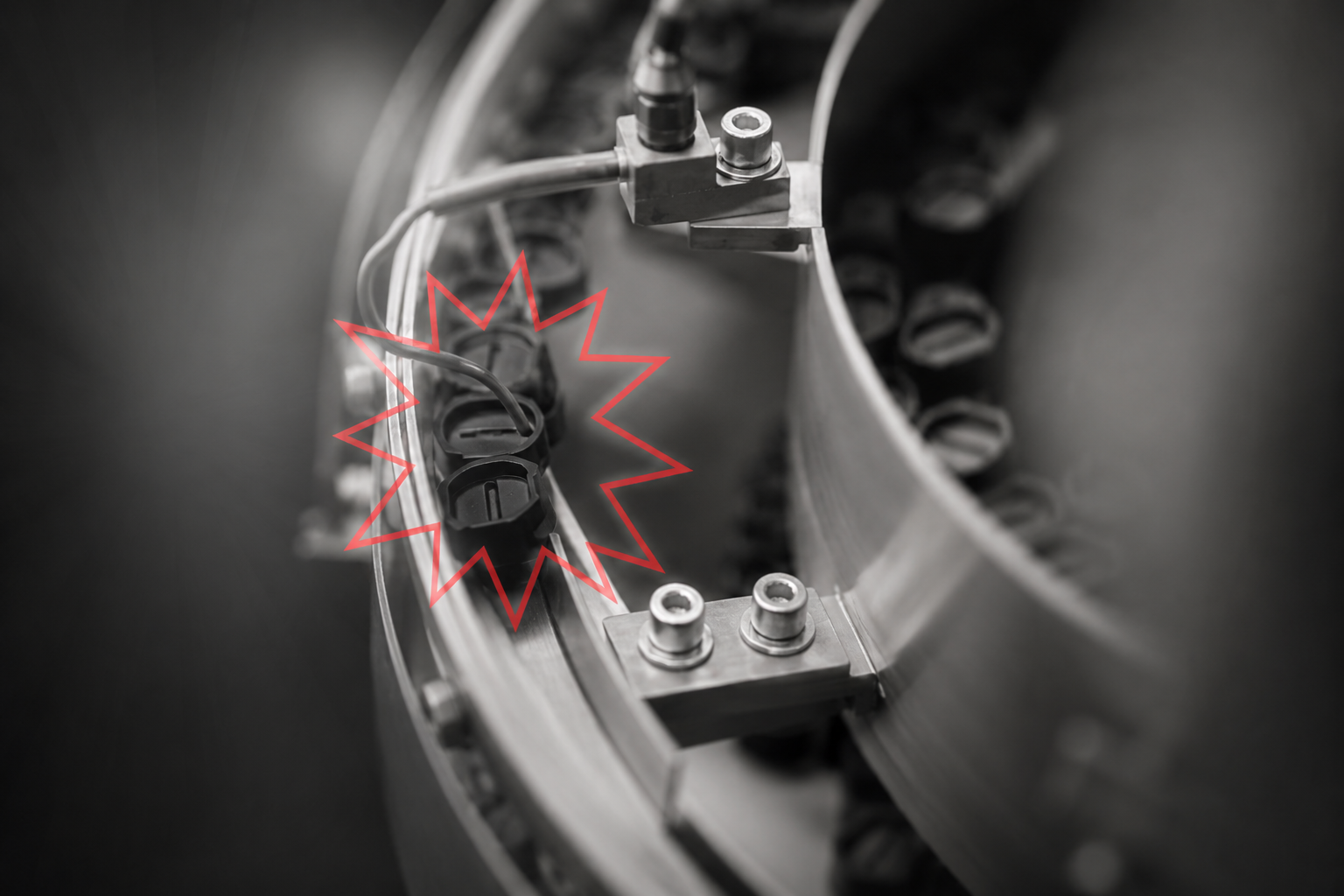
- 1960
3rd Industrial Revolution
Bowl feeders and vibratory feeders developed
Even now
Still a feeder, or a person
Low-mix, high-volume
Solvable with bowl feeders and vibratory feeders
High-mix, low-volume
People align parts by hand — an automation gap
New Solution Needed
Even when the model changes, one recipe selection must switch it over,
and high-mix parts must be fed without an operator.
A flexible feeder fills this gap with vibratory spreading + vision recognition + Recipe changeover.
03
The line takes over the flexibility people used to provide
Piled-up parts, one at a time, like a person — the robot takes the arm, camera vision takes the eyes, and integrated control takes the judgment.
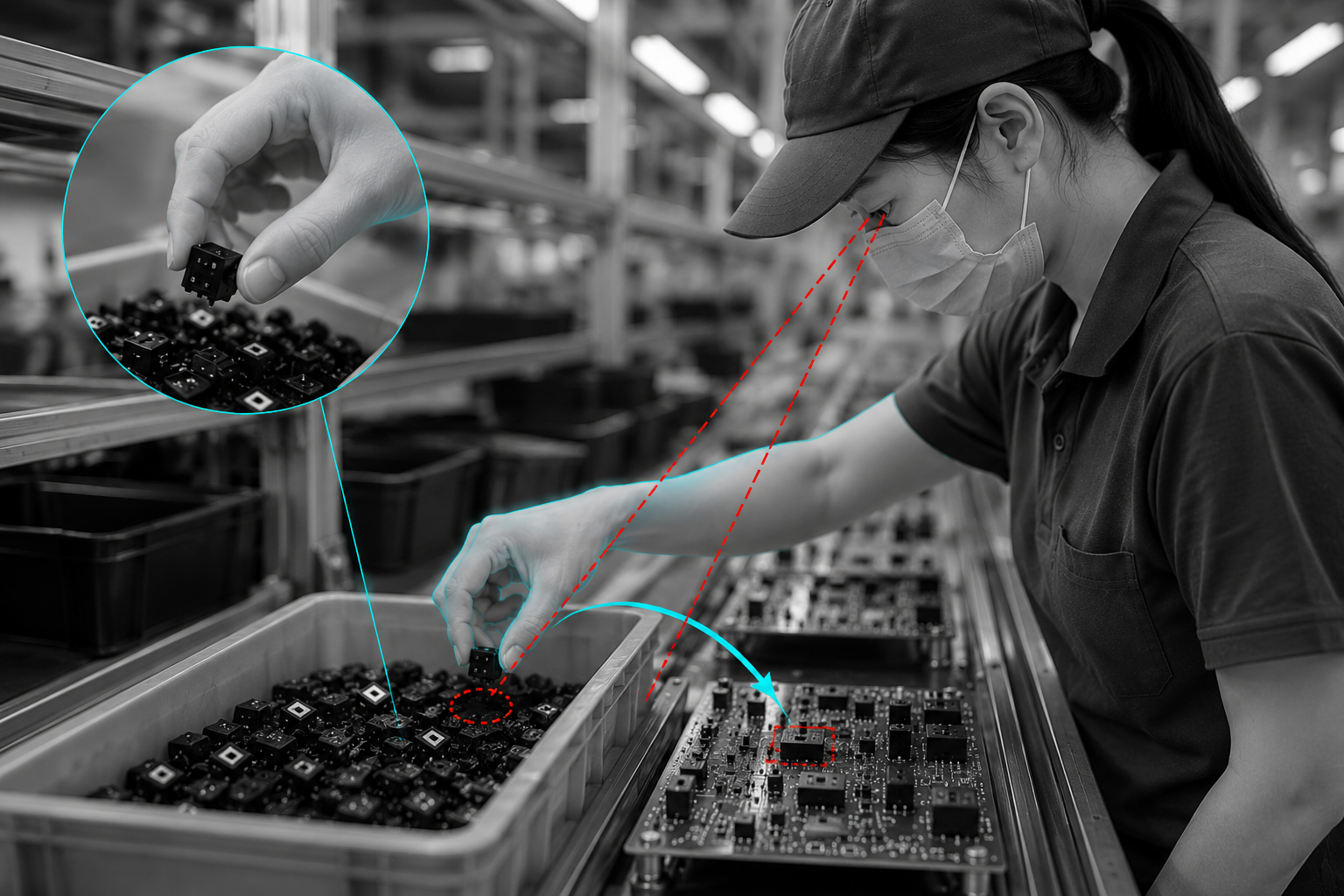
A robot for the arm
Repeats pick-up and transfer precisely using the aligned coordinates.
Camera vision for the eyes
Recognizes part position and pose in real time and passes the coordinates on.
Integrated control for the intelligence
Automates model changeover and condition management with a single Recipe.
04
Bulk → pick-up, the five-step flow
The standardized parameters of each step are saved as a Recipe and switched together when the model changes.
-
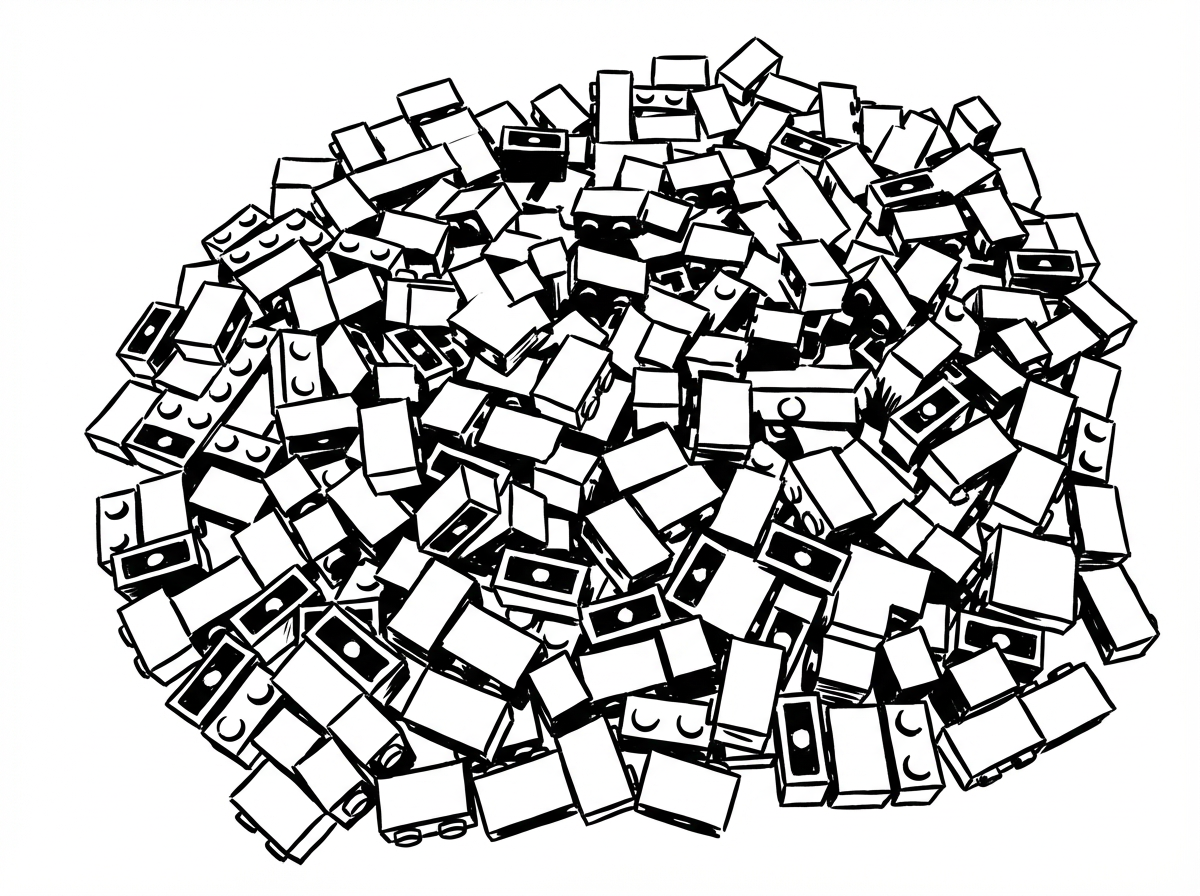 01 Bulk
It starts with parts randomly mixed together.
-
 02 Feed
A hopper or tray supplies the feeder and keeps the quantity steady.
-
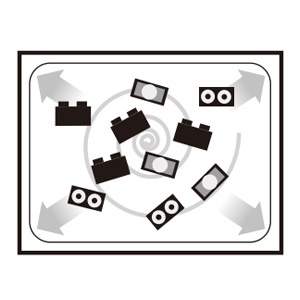 03 Spread
Vibration patterns spread the parts out to reduce overlap and interference.
-
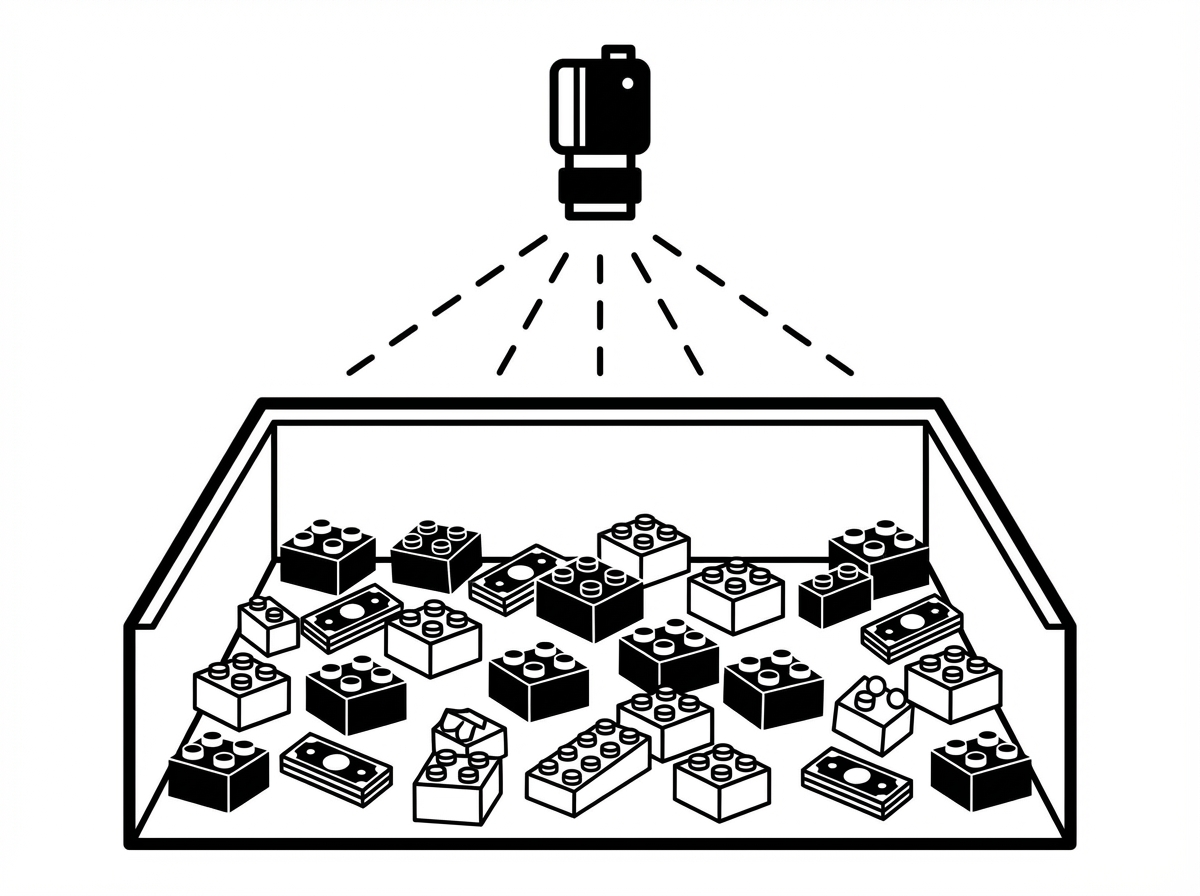 04 Detect
Vision computes pose, center coordinates and interference.
-
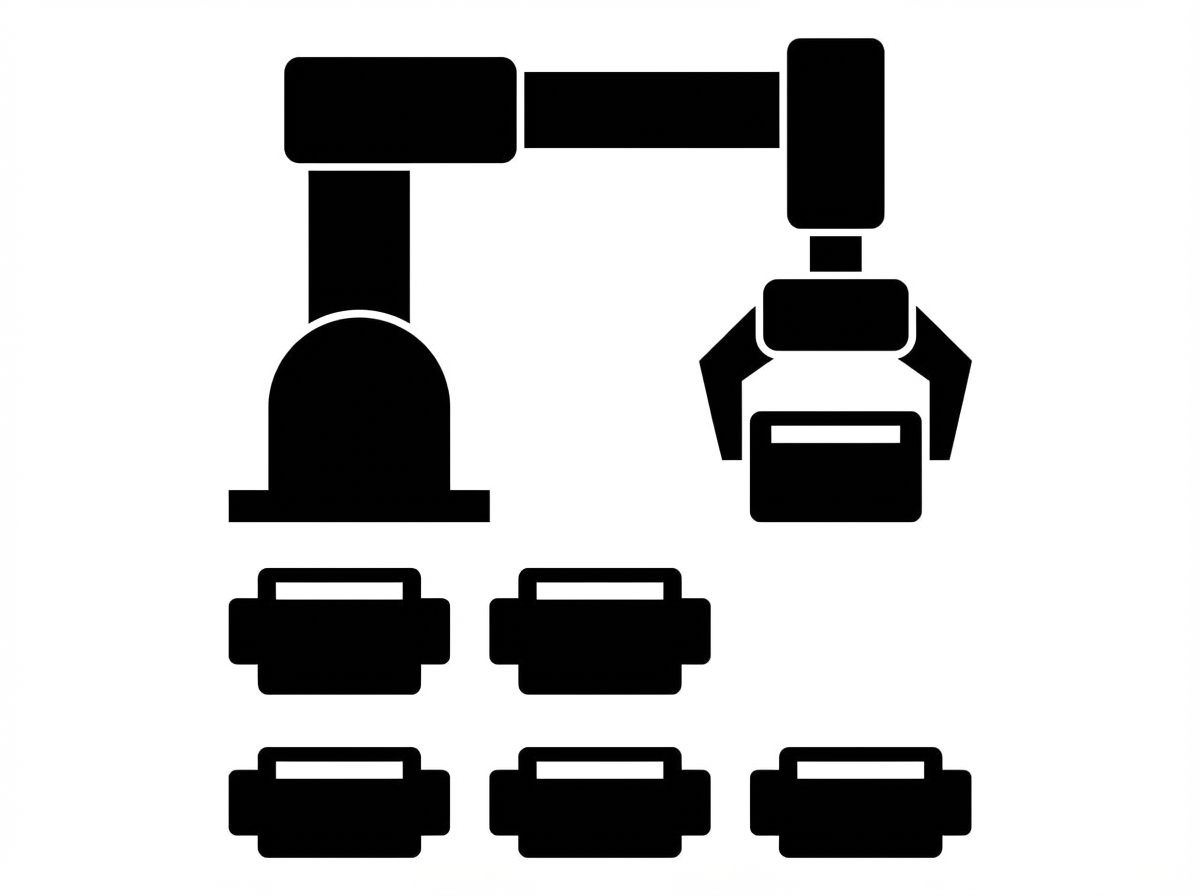 05 Pick & Place
The robot picks and places using the aligned coordinates.
Products
That is the principle. To bring it in as a product
What actually runs the flow above is UniFeeder (vibration and hopper) and AimFactoryCore (vision, control and recipes).
05
System configuration
Made up of software, vision and feeders. See each product page for detailed specifications.
AIMFactoryCore
Runs recipes, vision, equipment control and product changeover as one.
See the product →
UniFeeder
A vibration-based flexible feeder that supplies high-mix parts reliably.
See the product →
AIVE
A precision feeding system that combines feeder, vision and control in one unit.
See the product →
FlexiBowl
A rotary flexible parts feeder that handles a wide range of part shapes.
See the product →
Case studies
Cases applied on real parts, robots and lines.

Electronic component manufacturing · Undisclosed
4×6 mm Silicone Parts a Vibratory Feeder Couldn't Handle, Auto-Inserted into Trays at 0% Defects
Read the case →

Electronic component manufacturing · IAI Robotics
0.3 mm SMD Parts, Reel Taping Automated with ±0.05 mm Pick-and-Insert Error
Read the case →
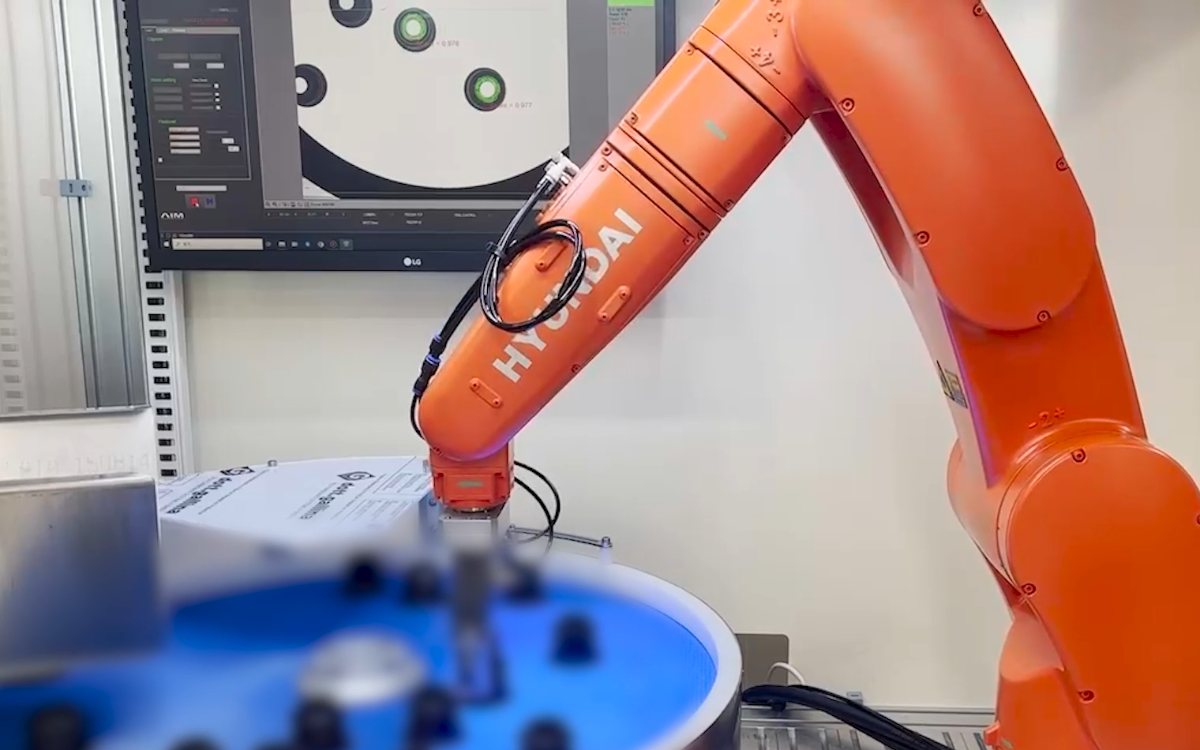
Automotive parts · Hyundai Robotics (joint verification)
Variant Changeover Under 5 Minutes, Pick Alignment ±0.2 mm — Hyundai Robotics HH7 Flexible Feeding
Read the case →
FAQ
Flexible feeder — frequently asked questions
- What is a flexible feeder?
- A flexible feeder is a way of supplying parts that spreads them out by vibration or rotation, recognizes their position and pose with camera vision, and then uses coordinate alignment (calibration) to produce coordinates the robot can pick from directly. Unlike a part-specific bowl feeder, one machine feeds many different parts, and a model change is handled by switching the recipe.
- What is the difference between a bowl feeder (vibratory bowl feeder) and a flexible feeder?
- A bowl feeder needs a dedicated bowl and track built for each part, which suits feeding one part in high volume. A flexible feeder is vision-based, so it feeds many part types on one machine without part-specific tooling, and it handles parts a bowl feeder struggles with, such as thin sheets, rubber and springs. The more high-mix, low-volume your production, the more a flexible feeder has the advantage.
- What part sizes and shapes can it feed?
- Part size depends on the equipment combination and the lighting and lens setup. To date we have handled parts from 0.01 mm thin films to 125 mm medical components. Vibration-type (UniFeeder, AIVE) or rotary-type (FlexiBowl) is chosen to suit the part, and we check spreading, recognition and alignment feasibility in advance with your actual part samples.
- How long does a product (model) changeover take?
- Once vision, feeder and robot conditions are saved as a recipe, a model change is a single recipe-ID selection. Pick one recipe and the vision, robot and feeder conditions are applied together; with no part-specific tooling to swap, utilization on high-mix lines goes up.
- Does it integrate with our existing robots and PLCs?
- How deep we go differs by robot. Most robots receive the pick coordinates from us, and for two robots — Hyundai Robotics and Agilebot — we handle the robot program itself from our screen. Including PLC integration, every recipe and all equipment control runs together on the AimFactoryCore platform.
- How do I get pricing or a quote?
- The configuration depends on part types, target cycle time, installation space and the robot/PLC environment, so share your part information and we will review a suitable configuration and expected schedule, then quote. You can request a consultation through the contact page or by phone (+82-31-548-0748).
Will it work with our parts? — Let's review it together
We review spreading, recognition and alignment feasibility with your actual part samples and propose a suitable configuration.