Challenge
Parts with many variants, and more to come, were being picked and loaded one by one by hand
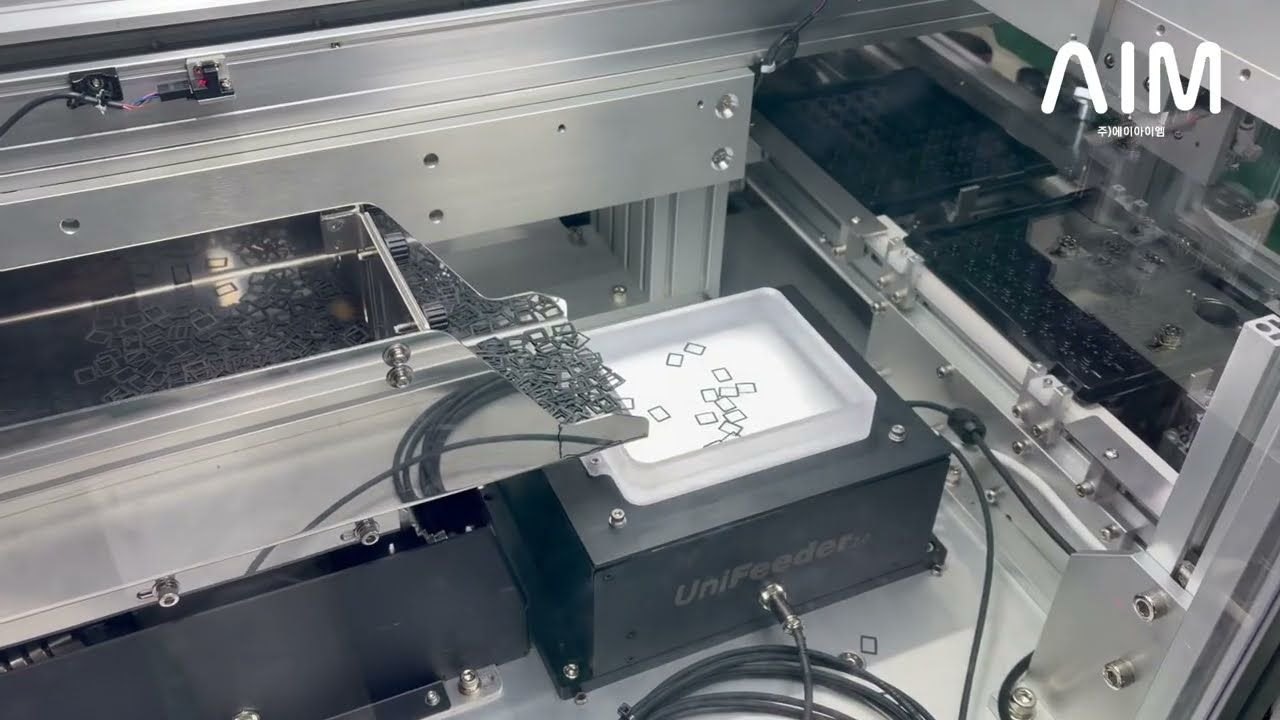
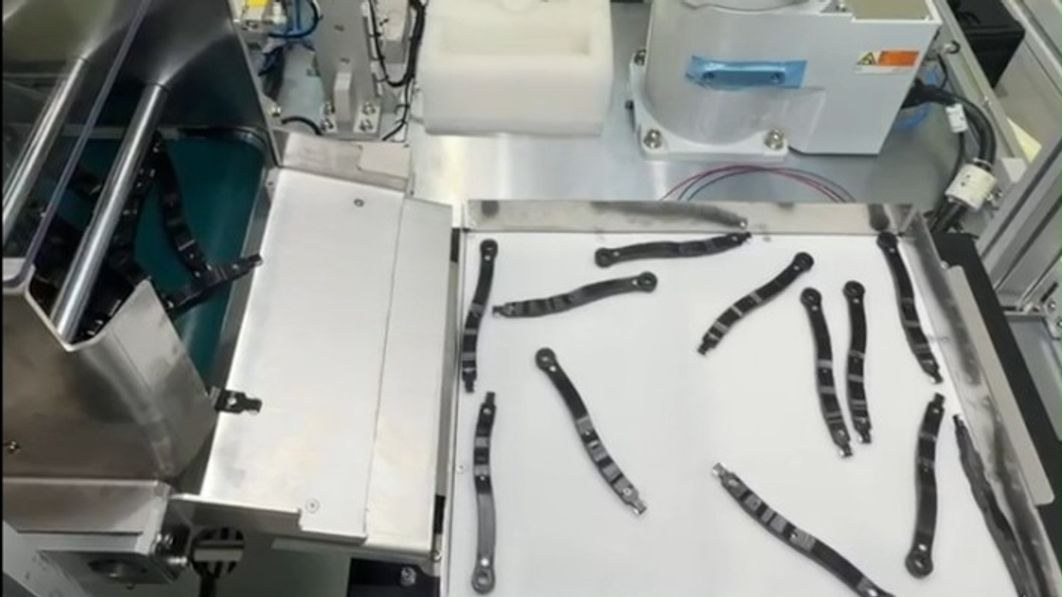
Feeding and inserting automotive arm parts was a process done by hand. There were many variants, and the production items were going to keep changing. What was needed was not equipment that handles only the part being made today, but a feeding method that could take on parts of different shapes on the same equipment.
Solution
RoboEye machine vision reads the position and orientation of the part, and the EPSON 6-axis robot picks at those coordinates
UNI FEEDER 5.0, RoboEye machine vision and an EPSON 6-axis robot were integrated into a single flow. The feeder spreads the automotive arm parts on the feed surface, vision recognizes the position and orientation of each part in real time, and the robot picks at those coordinates and inserts the part. Because there is no assumption that parts are loaded in a predetermined pose, parts of different shapes are handled with the same configuration.
- Feeding — UNI FEEDER 5.0
- Recognition — RoboEye machine vision (real-time position and orientation recognition)
- Handling — EPSON 6-axis robot pick-and-place · insertion
Results
Manual feeding and insertion replaced at 10–12 pcs/min, and no equipment rebuild when variants change
- Feed and insertion rate — automotive arm parts are fed and inserted at 10–12 pcs/min.
- Labor replacement — the feeding and insertion process previously done by hand was replaced.
- Variant handling — parts of different shapes are handled with the same feeder and the same vision configuration.
- Future changes — the configuration was built on the premise that production items keep changing.