Case Study · Semiconductor · Electronic component manufacturing

Semiconductor Destructive Inspection Automation That Finds Inspection Points Without Fixed Coordinates

Two cameras acquire rough coordinates and then precise coordinates at four corners in sequence, locating the destructive inspection points of semiconductors whose chip layout differs by product — without fixed coordinates.

Cameras that locate the inspection coordinates — one for rough coordinates, one for precise corner coordinates
2 cameras
Corners where precise coordinates are acquired for every product
4 corners

Semiconductor Destructive Inspection Automation System | 2D Robot Vision | IAI Cartesian Robot | AIM Vision

Watch on YouTube →

What and how

Configuration of this case

Part
Semiconductor products with chip arrays — memory and other electronic components
Process
Destructive inspection — inspection point detection and correction, then move
Robot
IAI Cartesian robot (XSEL controller, TCP control)
Vision
Two 2D cameras — chip layout recognition, product corner detection
Industry
Semiconductor · Electronic component manufacturing
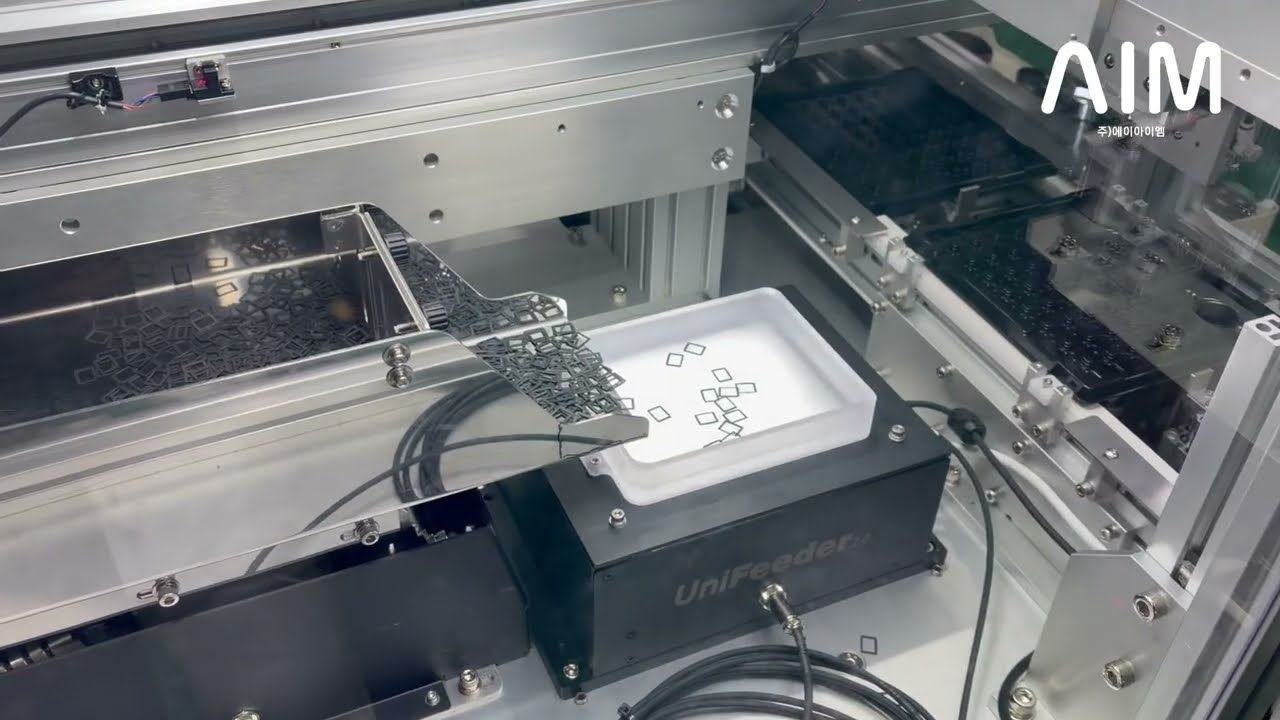
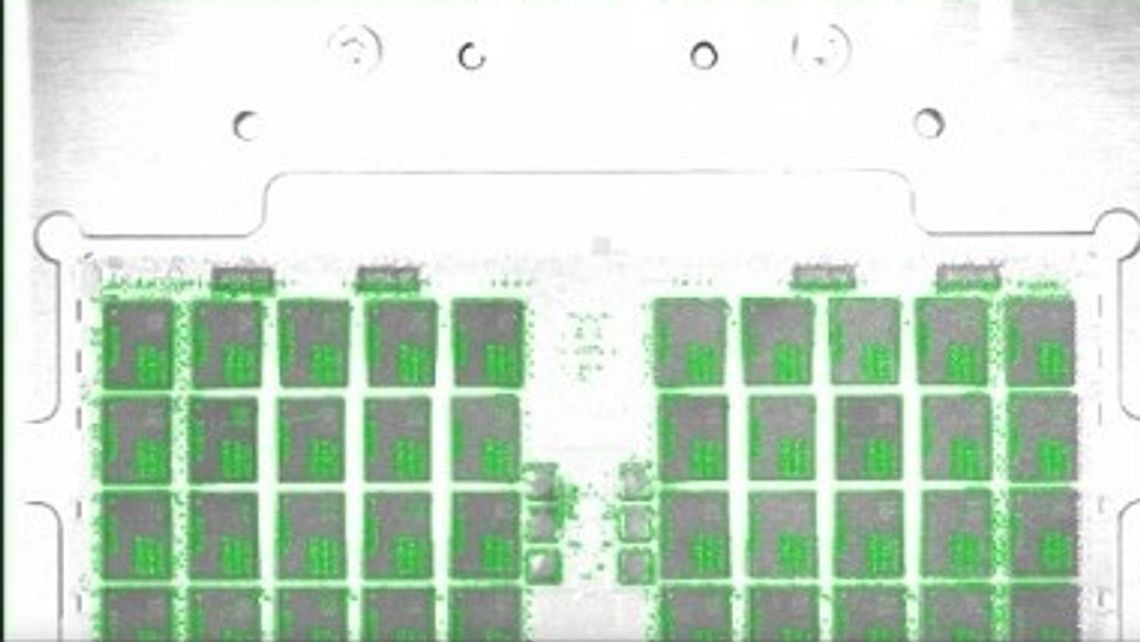
Semiconductor Destructive Inspection Automation That Finds Inspection Points Without Fixed Coordinates — part and detection view

Challenge

The chip layout differs by product, so fixed coordinates cannot locate the inspection point

Destructive inspection has to be carried out at precisely located points on the product. But this line receives products whose chip layouts differ from one another. With coordinates taught once into the robot, the inspection point drifts every time the product changes, and the same problem appears whenever the product is placed even slightly off.

Solution

Two cameras narrow down step by step, from rough coordinates to precise corner coordinates

AIM Vision recognizes the chip layout with 2D vision, corrects the position from the product corners, and then the inspection is performed. Coordinate acquisition was split into two stages.

  • The first camera images the whole product to obtain rough position coordinates.
  • The second camera acquires precise coordinates at four corners for each of those positions.
  • The IAI Cartesian robot moves to the inspection point using those precise coordinates. The robot is controlled over TCP communication through its XSEL controller.
  • A robot program editing screen and an inspection corner editing screen were developed in-house and included.

Robot, 2D vision and the inspection process are controlled together on a single platform.

Results

Nobody re-teaches coordinates — the inspection point follows the product even as it changes

  • When a product with a different chip layout comes in, the layout is recognized and the inspection points are recalculated — no fixed coordinates per product.
  • Position is corrected from the product corners, so the inspection point follows even when the product is placed off-center.
  • Precise coordinates at four corners are acquired step by step with two cameras, so a wide field of view and high precision are not demanded of a single camera.
  • A robot program editing screen and an inspection corner editing screen were developed in-house and included — inspection points are edited on this screen.
FAQ

Frequently asked about this case

How do you find the inspection points when the chip layout differs by product?

The product is imaged and the chip layout itself is recognized, then the inspection points are recalculated using the product corners as reference points. When a product with a different layout comes in, nobody has to re-teach the coordinates.

Why are two cameras used?

The first camera images the whole product to obtain rough position coordinates, and the second camera acquires precise coordinates at four corners for each of those positions. Wide-field viewing and precise viewing are assigned to separate cameras.

How is the IAI Cartesian robot controlled?

The IAI Cartesian robot is controlled entirely over TCP communication through its XSEL controller. It receives the precise coordinates computed by vision directly and moves to the inspection point.

Can semiconductor destructive inspection be automated with robot vision?

This case is that configuration. 2D vision finds the point to inspect, and the Cartesian robot moves there to perform the destructive inspection. Robot, vision and the inspection process are controlled together on a single platform.

Do we have to reprogram to change which corners are inspected?

A robot program editing screen and an inspection corner editing screen were developed in-house and included. Inspection points are edited on this screen.